
Strength Training: Why Ultimate Frisbee Is Wrecking Your Body

And why strength training is the missing link that builds real resilience, protects your joints and tendons, and keeps you explosive through cuts, jumps, and long tournament weekends.

Ultimate frisbee is played by a certain person: someone with passion, grit and a love for the game. The sport has created a community of like-minded individuals who arrive to socialise, have fun and of course, play hard.
Ultimate is played with the intensity of a full time job. You sprint deep, slam on the brakes, cut hard off either leg, pivot under a mark, jump in traffic, land awkwardly, then lay out when you’re already cooked. And you do all of that in the wind, on different fields, against different defenders, with different forces and angles at every single point. And yet we train like this is a second rate hobby. A jog here and there, gyming without much of a plan, and joining practice when work and schedules allow it.

"Passion, grit and a love for the game"
We then play a three day tournament where the stakes are high and the competition higher and we are confused that when we are tired, stiff and sore, that we get injured (Khoo, et al, 2021).
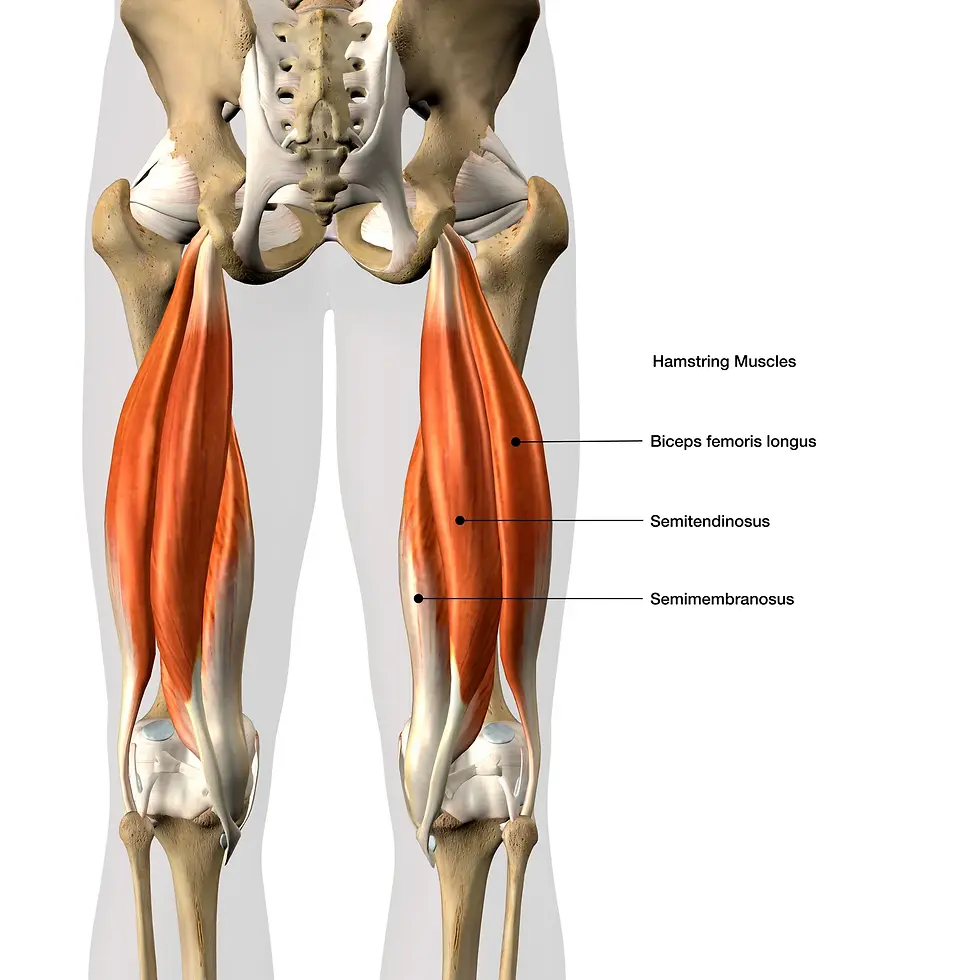
If you’ve ever felt fine in practice but get punished in tournament intensity, that’s often not a fitness issue, it’s a capacity issue. Ultimate frisbee has a substantial injury burden, commonly involving muscle strains and joint sprains, with frequent issues around the knee, thigh, ankle, and shoulder (Pulido, et al, 2020). While no program can make you “injury-proof,” strength training is one of the most reliable ways to reduce risk by improving your capacity.
This is exactly why resistance and strength training matters for Ultimate. A player can have great skills, but those skills are only useful if the body can express them at speed, under fatigue, and in unpredictable positions. Strength is the quality that lets your athleticism show up when the game stops being neat, when the body is exhausted and the competition is still going.
Ultimate is played on the field, not in a gym. Why would I do strength training?
Ultimate frisbee is unpredictable. You are not running in a straight line under constant conditions. The sport demands multiplanar movements in an ever-changing environment at different forces, angles, and speeds—over different lengths of time.
The goal of training is to build adaptations that help you meet those physiological and mechanical demands, so you can keep performing at a high level.
Resistance training improves how your system produces force through both neural and muscular adaptations.

Those adaptations are what let you produce more force and use it better.
The obvious benefit are stronger muscles. Pulling, pushing and lifting heavy objects result in muscle hypertrophy. This means more potential force production, and that supports sprinting, jumping, and the ability to tolerate more (Brumitt, et al, 2015).
With sport specific training you also develop tendon health. Tendons transmit energy to produce moevement at the joint. A well-conditioned tendon helps you store and release energy better, which is huge for repeated sprinting and change of direction (Brumitt, et al, 2015).

Ultimate athletes take impacts: layouts, contact, hard landings, and the cumulative stress of running and cutting. Resistance training is widely used to support bone mineral density and bone health (Massini, et al, 2022). Even if you’re young and feel invincible, bone health is a long game and strength training is one of the best tools you have.
One of the most helpful changes is the brain body link that is developed in strength training, known as your central and peripheral nervous system (Aslam, et al, 2025). Moving heavy weights in a sport specific way can improve neural drive and motor unit recruitment, so you can switch on faster for that first step on an upline, punch a sharp break cut, chase a floaty disc, or explode for a contested grab (Liang, 2025). It also tightens coordination from your brain to your muscles and joints, so your plant feels solid and your knee stays stable when you brake and change direction.

In Ultimate terms: you don’t just get “stronger”. You get better at turning your engine on at full speed, in the exact moments that decide points.
All of this comes back to the same DISCFIT principle: strength training is only valuable when it can be applied on the field. Ultimate is not a controlled environment, so you don’t train for control. You train for adaptability. You train so that when the point becomes unpredictable, your body is not guessing. You can brake, re-accelerate, pivot, jump, land, and lay out with a system that has earned those positions through progressive loading and intelligent strength work.
Strength training isn't a nice extra, It’s a base requirement for high performance. When you do this well, strength becomes the thing that lets your skills stay reliable when the point gets chaotic.
The outcome you should be chasing is not just being stronger in the gym. It’s being a confident player who trusts their body. That’s Ultimate strength. That’s the point.
-Ally Smith
References:
Pulido DF, et al. Epidemiology of Injuries in Ultimate (Frisbee). (2020).Khoo KJ, et al. Characterization of injuries in elite club-level ultimate players. (2021).Aslam S, et al. Neuromuscular adaptations to resistance training (review). (2025).Rong W, et al. Strength training and neuromuscular adaptations. (2025).Liang C, et al. Resistance training mechanisms and nervous system adaptations. (2025).Brumitt J, et al. Current concepts of muscle and tendon adaptation. (2015).Massini DA, et al. Effect of resistance training on bone mineral density (meta-analysis). (2022).Alnasser SM, et al. Exercise loading and bone mineral density (review). (2025).

Comments